Building a house is one of the biggest decisions of your life. And one of the first things you need to figure out is what kind of brick or block should I use? Lot of builders and homeowners are asking about clay hollow blocks for construction. They look different from regular bricks. They have holes in them. And the first question everyone asks is, are these actually strong enough for my walls? Let’s discus that properly.
What Exactly Are These Blocks?
Clay hollow blocks are made from natural clay. The same material used to make regular bricks. The difference is that these blocks have hollow spaces running through them. They are also bigger in size than a standard brick. These holes are not a defect. They are made that way on purpose.
The hollow spaces reduce the weight of each block. They also trap air inside the wall, and that trapped air does something very useful. It keeps heat from passing through easily. So in summers, your rooms stay cooler. In winter, less heat escapes outside. Also, because each block is bigger, one block covers more wall area than two or three regular bricks. So construction moves faster.
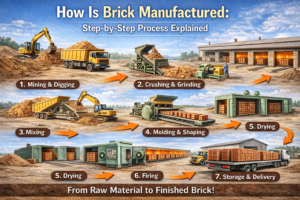
Clay hollow blocks for construction are made using a machine extrusion process — clay is pushed through a mould and then fired at high temperatures in a kiln. When done right, the result is a block that is hard, durable, and ready to handle serious construction loads.

How Are They Different from Normal Bricks?
Regular bricks are solid and smaller. You need more of them to cover the same wall area. They are also heavier per square metre of wall. Hollow blocks are larger and lighter. You need fewer of them. Your mason works faster. You use less mortar. And the wall itself puts less weight on the foundation below it.
But the biggest practical difference, and the one most people do not expect is the insulation effect. That air gap inside the block acts like a natural barrier. Heat from outside struggles to get in. Heat from inside struggles to get out. Because of this, many families living in hollow block houses notice their electricity bills are lower. The AC does not have to work as hard in summer. The room does not get cold as fast in winter. Also, hollow block walls absorb sound better than many other materials. If your plot is near a busy road or a noisy neighbourhood, this matters quite a bit.
Can They Handle Load-Bearing Walls
This is what everyone really wants to know. Clay blocks for load-bearing walls can absolutely be used, but it depends on a few things. The compressive strength of the block matters. The thickness of the wall matters. How many floors you are building matters. And what your structural engineer says matters most of all. For a regular two or three floor home — the kind most Indian families build clay hollow blocks with proper strength ratings work perfectly fine as load-bearing walls. Thousands of houses across Punjab and Haryana have been built this way. They are standing strong.
For taller buildings or very heavy structures, your engineer may ask you to add reinforcement or use solid sections in certain areas. That is completely normal. No engineer designs a building without looking at the specific load requirements.
The point is, do not dismiss hollow blocks because they have holes. A well-made, properly fired clay hollow block is genuinely strong. The holes are part of the engineering, not a compromise.
Real Benefits That Actually Matter on Site
Let me list out what builders actually experience when they switch to hollow blocks. Work goes faster. Each block covers more area. Your mason lays fewer units per day but covers more wall. The project moves quicker. Material cost comes down. You use less mortar. You buy fewer units. Over a large construction project, this saving adds up to a significant amount. The building is lighter overall. Less weight on the foundation means you may need less foundation material too, especially for smaller structures. Your walls breathe. Clay is a natural material. It handles moisture better than cement blocks or AAC blocks in many situations.
And the finished wall looks good. A properly laid clay hollow block wall has a clean, solid appearance. It takes paint and plaster well. These are the reasons more and more brick manufacturers in India are adding hollow blocks to their product range. The demand is growing because the benefits are real.
What You Should Watch Out For
Hollow blocks need careful handling. They are larger and if dropped or thrown around on site, they can crack. Make sure your contractor handles and stacks them properly. Drilling into hollow block walls needs a bit of thought. When you put up shelves, fit electrical boxes, or run pipes, you need to be aware of the hollow spaces inside. A little planning avoids problems.
And for very heavy structural loads, multi-storey commercial buildings, for example always get your structural engineer involved before deciding on hollow blocks for load-bearing sections. Do not make that call on your own. For most standard residential construction though homes, compound walls, partition walls, clay hollow blocks for construction are a solid, sensible choice.
How to Pick the Right Block
Not every hollow block on the market is the same quality. This is where many people make mistakes. Ask for the compressive strength rating before you buy. Higher strength means it can carry more load. Any serious supplier will tell you this number without hesitation. Check that the blocks are uniform in size. If they vary too much, your walls will not be even. The mason will struggle and the finish will suffer.
Look at the surface. A properly fired block feels hard and slightly rough. If it feels soft or dusty, it was not fired at the right temperature. Such blocks absorb too much water and weaken over time. And buy from a manufacturer with a real track record. Your building will last decades. The material you put into it needs to be worth trusting.
Mahaluxmi Bricks
We have been making bricks and blocks since the 1980s. That is over four decades of learning exactly what works and what does not in Indian construction. Our plants in Derabassi, Punjab and Panchkula, Haryana use internationally sourced technology and carefully selected clay. Every batch goes through quality checks before it leaves our facility.
Builders, contractors, and homeowners across the region have trusted us for years, not because of what we say about ourselves, but because our material performs on site, year after year. If you are planning a construction project and want to know whether clay hollow blocks for construction are right for your specific needs just call us. We will give you an honest answer.